


Security guard work in the Philippines has been steady for years now. Lots of people turn to it when they want something reliable, even if the pay isn't always the best at first.
Who usually takes these jobs
Most folks I know who do this are between 20 and 40. Some come straight from the province looking for steady hours in the city. Others switch from retail or construction because the routine feels safer once you get used to it.
Height and build still matter for many postings. Companies often want at least 5'4" for men and 5'2" for women, plus a clean record. That part hasn't changed much.
What training do you need
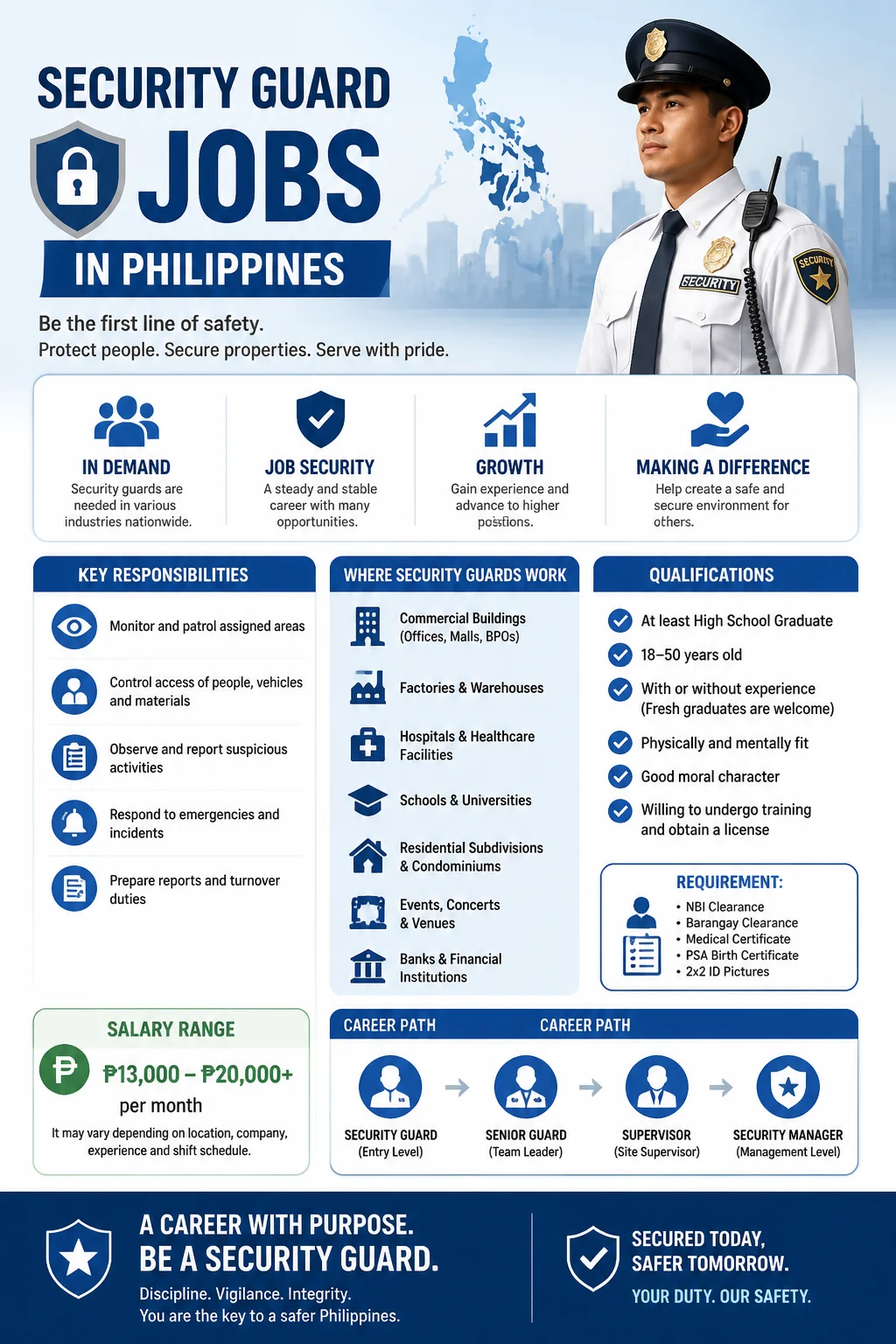
You'll need the basic security guard training from an accredited school. Then you apply for your license through SOSIA. Without that license you're pretty much stuck doing informal gigs that pay less and can disappear overnight.
The course isn't too long but it covers first aid, basic self-defense, and report writing. A lot of agencies will help you with the paperwork once you're hired, which saves time.
How much can you actually earn
Starting pay sits around 12,000 to 16,000 pesos a month depending on the site. Malls and office buildings usually sit at the higher end. Industrial plants and subdivisions pay a bit less but sometimes throw in free meals or transport.
Night shifts and holiday work add a little extra. Overtime is common too if the agency is short on people. From what I've seen, experienced guards with supervisor roles can push past 20k after a couple years.
Where the better openings show up
Manila and Cebu still have the most postings. But Clark and Subic areas keep growing because of all the new warehouses and call centers. If you're willing to move, those spots sometimes include dorm housing.
Big agencies like those tied to the major security networks post openings regularly. Smaller outfits can be hit or miss with benefits but they might hire faster.
Daily life on the job
Shifts run eight to twelve hours. Standing for long stretches is normal. You rotate posts every few days so it doesn't get too boring. Some sites let you sit in a guard house, others want you walking the perimeter.
Paperwork is part of it. Logging visitors, checking IDs, writing incident reports when something happens. It's not exciting but it keeps things organized.
Common headaches
Some agencies delay salary releases. Others change schedules last minute. The uniform can feel heavy in the heat too, especially during summer. Not gonna lie, those things add up if you stay long term.
Yet plenty of guards stick around because the work is straightforward once you learn the ropes. No sales targets, no chasing quotas.
How to apply without wasting time
Check job sites and Facebook pages of agencies directly. Bring your training certificate, license photocopy, and at least two valid IDs. Some places do same-day interviews if you're lucky.
Be ready for a simple background check. Anything on your record can block you fast, so be honest upfront.
Start with two or three applications instead of blasting out twenty. Follow up after three days if you don't hear back. That small step helps you stand out.